The internet is full of fabulous facts about everything from current events to the history basket weaving and caviar fun facts. As we research for our daily content on food trucks, food carts and street food, we stumble upon some items of knowledge that we just did not know.
We have decided when these fun facts pop up, that we would share them with our readers in our section titled “Did You Know?”
For today’s Did You Know we will look at Caviar fun facts
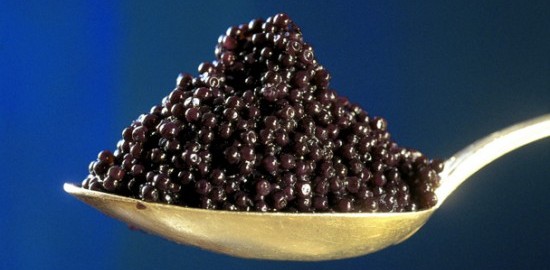
Caviar Fun Facts: Caviar is any single salted fish roe or egg. TRUE caviar comes from the icy waters of the Caspian Sea from the finest sturgeon. Ninety-five percent of the caviar produced in the world comes from the Caspian Sea. Only three sturgeon species produce this caviar: Beluga, Osetra, and Sevruga.
- A little known fact about caviar is that it shouldn’t touch metal like silver. Otherwise, the eggs will take on a metallic taste. Instead, you’ll need to serve it in a glass bowl, preferably crystal. To remove it from its container, you’ll need to use a wooden, glass or gold spoon.
- To serve caviar properly, it should be kept on ice.
- Sturgeon have survived since the days the dinosaurs roamed the Earth. Commercial fishermen have hunted sturgeon for their roe and meat since at least 1100 BC. Ancient Greek and Roman literature refers to caviar, and the Chinese were trading it as early as the 10th century AD.
- A single Sturgeon can produce hundreds of pounds of roe, though the very largest fish are extremely rare today, following decades of overfishing, poaching, pollution and habitat loss.
- July 18th is National Caviar Day.
- Of the most concern is the beluga sturgeon, which produces beluga caviar, whose populations have declined more than 90 percent in the past two decades. Experts believe beluga sturgeon are so depleted that they may no longer be reproducing in the wild.
- Demand for the delicacy is highest in the European Union, Switzerland, the United States and Japan, which together account for 95 percent of the world’s total caviar imports.
- The United States is the largest market for beluga caviar, importing 60 percent of world supplies. Imported caviar sells for $100 an ounce or more in the United States. From 1989 to 1997, the United States imported an average of 130,000 pounds of caviar per year, worth about $6.6 million.
Caviar Fun Facts We Missed
Let us know if we missed any caviar fun facts in the comment section below. We always love to add to these lists. If we can verify that the facts is just that, a fact, we will give the reader credit in the article.
Reference: Wikipedia: Fun Facts about Caviar.